

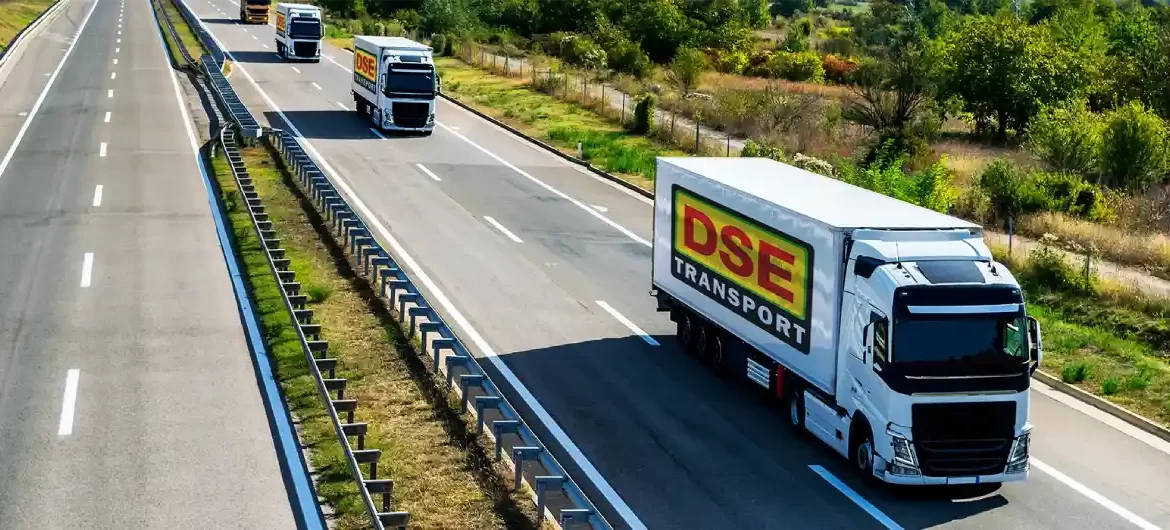
Businesses moving freight between Australian cities and regional centres need transport that suits the size of the load, delivery location and required timeframe. Linehaul shipping covers the long-distance movement of freight between major points such as warehouses, depots, distribution centres and customer locations.
Depending on the consignment, interstate freight may travel on a dedicated truck or as part of a consolidated service with other compatible loads. Understanding these options can help businesses select an appropriate service, provide the right booking information and plan interstate deliveries more effectively.
DSE Transport provides linehaul services to Australian capital cities and many rural and regional destinations, with vehicle and service options for different freight requirements.
Key Takeaways
- Linehaul shipping is used to move freight over longer distances between metropolitan, interstate and regional locations.
- DSE Transport uses dedicated linehaul delivery for bookings of 10 pallets or more.
- Bookings of one to nine pallets can use express or general pallet services, depending on delivery requirements.
- Less-than-truckload (LTL) services can suit freight that does not require a full truckload.
- Vehicle selection should reflect freight dimensions, weight, loading method and site access.
- Accurate collection, delivery and unloading information helps determine the most appropriate transport arrangement.
What Is Linehaul Shipping?
Linehaul shipping is the long-distance transport stage that moves freight between established locations in a logistics network. In Australia, it commonly involves road freight travelling between capital cities, regional areas, warehouses, distribution facilities and commercial sites.
A shipment collected in Sydney, for example, may travel by linehaul truck to Melbourne or Brisbane. Depending on the service, the truck may deliver directly to the destination or the freight may move through a consolidation facility before completing the final delivery leg.
Linehaul transport can be used for palletised goods, commercial freight, construction materials, exhibition freight and larger or unusually shaped loads. The suitable transport method depends on factors such as pallet quantity, dimensions, weight, route, delivery timing and access at the collection and delivery sites.
How Do Dedicated and Consolidated Linehaul Services Differ?
The main difference is how vehicle capacity is allocated.
A dedicated linehaul service uses a truck for a specific customer’s freight movement. This approach can suit larger consignments, direct interstate movements and loads with particular handling or scheduling requirements.
DSE Transport states that bookings of 10 pallets or more are completed using dedicated linehaul delivery. For freight collected in Sydney, a qualifying dedicated load travelling to Brisbane or Melbourne can arrive the following business day. DSE notes that timing is affected by traffic and driver fatigue requirements, with full transit times provided when booking.
A consolidated service combines freight collected from multiple customers. The loads are brought to a sorting or consolidation point and organised for delivery to different destinations. This approach can be practical when a customer does not need the capacity of an entire truck.
DSE also provides less-than-truckload (LTL) freight options for suitable loads that do not require a full truckload.
How Long Does Interstate Pallet Freight Take?
Transit times vary according to the number of pallets, service selected, route and operating conditions.
For bookings of one to nine pallets, DSE Transport offers express and general service options. Its express pallet service prioritises freight and can provide next-business-day delivery from Sydney to Melbourne or Brisbane. DSE states that this express service costs 20% more than the general service.
For the same Sydney-to-Melbourne or Sydney-to-Brisbane routes, DSE lists a general-service transit time of approximately two to three days. Full transit times are confirmed when the freight is booked.
Businesses should therefore consider more than speed when choosing a service. Freight volume, delivery priorities and budget can help determine whether dedicated, express or general transport is more appropriate.
Which Vehicles Are Used for Linehaul Freight?
The right truck depends on what is being transported and how it needs to be loaded and unloaded.
Tautliners provide side-curtain access, making them useful when freight needs convenient side loading while remaining enclosed during transport. Flattop trucks, sometimes referred to as open trucks, can accommodate large or awkwardly sized freight where flexible loading and unloading access is important.
For higher-volume movements, semi-trailers and B-doubles provide greater pallet capacity. DSE’s vehicle guide states that semi-trailers can carry approximately 22 to 24 pallets, while B-doubles can carry up to 34 pallets. These capacities are guides only because vehicle configurations, accessories and load characteristics can affect available capacity.
DSE also has rigid and crane-truck options for freight with different capacity or handling requirements. Providing accurate dimensions and weight when booking allows the transport provider to assess which vehicle configuration is suitable.
What Should You Know About Regional Linehaul Deliveries?
Interstate freight does not always finish in a capital city. Businesses may need goods delivered to regional warehouses, construction sites, stores, farms or other country locations.
DSE Transport provides dedicated truck services into regional Australia through its offices. It can also arrange consolidated pallet movements in regional areas through transport partners.
Regional and final-leg deliveries can require additional planning, particularly when large trucks cannot easily access the destination.
For example, if an interstate pallet delivery location does not have a forklift, DSE asks customers to provide this information when booking so the final leg can be completed with an appropriate vehicle. For metropolitan residential deliveries where access is unsuitable for a large truck, freight may be collected from the consolidation yard and delivered using a smaller vehicle as a separate service.
These details are important because site access and unloading facilities can influence both vehicle selection and the delivery arrangement.
What Information Is Needed When Booking Linehaul Freight?
Accurate booking information helps the transport provider assess the load and plan the journey before collection.
Businesses should provide:
- Collection and delivery locations
- Number of pallets or freight units
- Freight dimensions and total weight
- Required delivery timeframe
- Loading and unloading arrangements
- Forklift availability
- Site or vehicle-access restrictions
- Details of oversized, long or unusually shaped freight
This information helps determine whether dedicated linehaul, consolidated freight or an LTL service is appropriate and which vehicle should be allocated.
For ongoing freight management, DSE Transport also provides customers with an online platform where they can order jobs, track vehicles, review job history and manage invoices and proof-of-delivery records.
Plan Linehaul Shipping Around the Freight, Route and Destination
Effective linehaul shipping starts with understanding the load rather than simply choosing the largest or fastest transport option. Pallet quantity, freight dimensions, destination, site access and delivery timing can all influence the service and vehicle required.
DSE Transport supports dedicated linehaul, consolidated pallet freight and LTL movements across Australian capital cities and many regional destinations. With different vehicle configurations available, businesses can arrange interstate freight according to the practical requirements of each shipment.
For an upcoming interstate or regional delivery, contact DSE Transport with the freight details, collection and delivery locations, and required timeframe to discuss a suitable linehaul transport option.